How to invest your money in Switzerland?
If you’re wondering how to invest your money in Switzerland and which solutions to choose to grow your wealth, the answers are here.
 Yindee Becker ·
This question comes up often, especially when savings start to build up: how to invest your money in Switzerlandin a smart and sustainable way?
In a country renowned for its economic stability, strong institutions, and the strength of its currency, investment opportunities are numerous. Yet, faced with this diversity, many investors quickly feel lost.
Should you invest in the stock market? Buy gold? Put your money into funds? Or prioritize real estate?
The reality is simple: there is no single right answer, but rather a strategy suited to each situation. Some investments offer security, others offer returns, and still others a balance between the two.

But one thing is certain: leaving your money idle for years is generally not an effective strategy. Inflation gradually erodes the purchasing power of your savings. Investing is precisely what allows you to put your capital to work.
And when you seriously look into how to invest your money in Switzerland, one type of investment comes up very often in discussions: real estate.
Why is Switzerland a favorable environment for investment?
Switzerland has long enjoyed a strong reputation in the financial world.
This reputation is based on several very concrete factors.
First of all, the Swiss economy stands out for its political and institutional stability. Sudden changes in economic policy are rare, which reassures investors.
Next, the country has a strong currency, the Swiss franc. In times of global economic uncertainty, this currency is often seen as a safe haven.

In addition to this:
- a banking system renowned for its prudence
- demanding financial regulation
- a dynamic real estate market in several regions
- strong economic attractiveness in certain cities
This context explains why many individuals, but also international investors, are seeking to understand how to invest their money in Switzerland in order to protect and grow their wealth.
As industry professionals often say:
“Investing in a stable country doesn’t guarantee a return, but it greatly reduces unpleasant surprises.”

The main options for investing your money in Switzerland
Before focusing on a single type of investment, it’s helpful to understand all the options available.
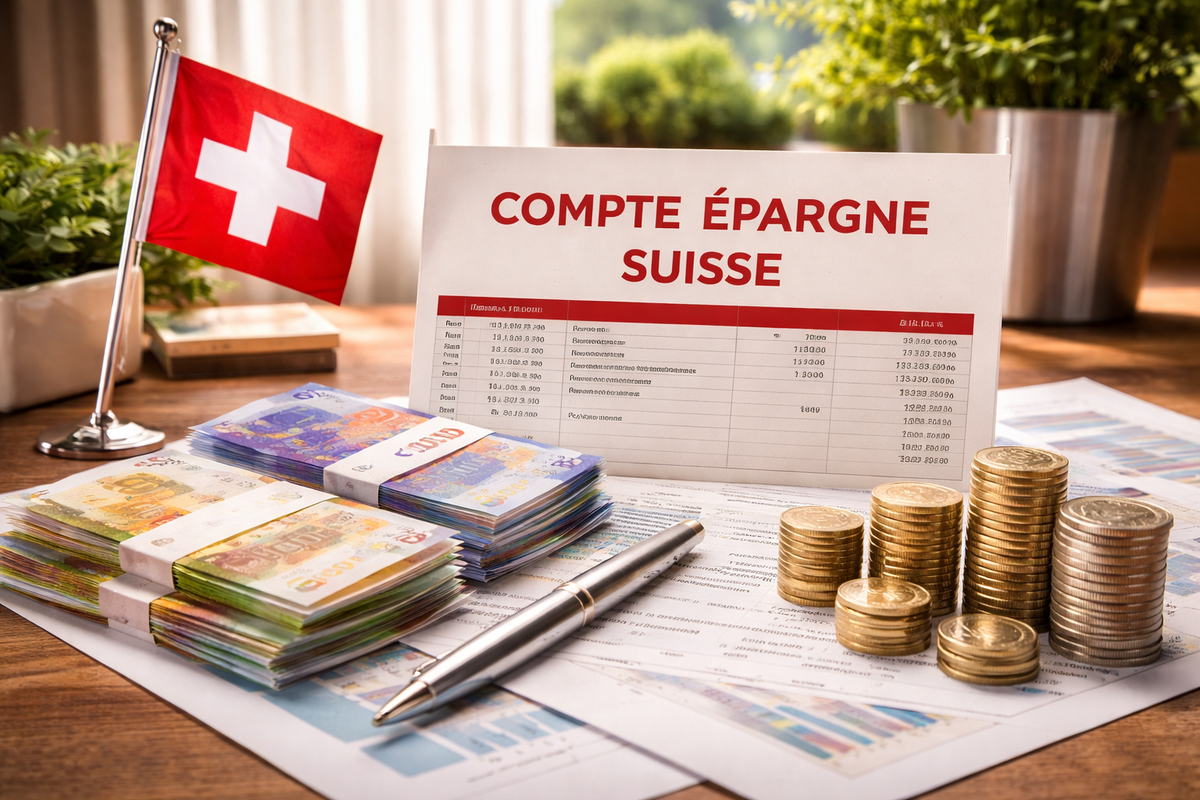
Savings accounts
A savings account is often the first instinct. The money is deposited in a bank and earns interest.
Advantages:
- capital accessible
- low risk
- simplicity
On the other hand, returns generally remain low. In some cases, they may even be lower than inflation.
In other words, a savings account is useful for securing a financial reserve, but rarely for significantly growing your wealth.
Bonds
Bonds work like a loan granted to a government or a company. In return, the investor receives interest.
This investment is often considered relatively stable. However, its potential return remains limited.
Bonds can therefore complement a wealth management strategy, but they are not always the main driver of capital growth.
Stocks and ETFs
Shares represent an ownership stake in a company. When the company grows, the value of the share can increase.
ETFs (index funds) allow you to invest in a group of companies through a single financial product.
This type of investment can offer:
- an attractive return potential
- a significant diversification
- high liquidity
However, volatility can be high, especially in the short term.
For this reason, equity investments are often considered from a long-term perspective.
Real estate: a cornerstone for investing in Switzerland
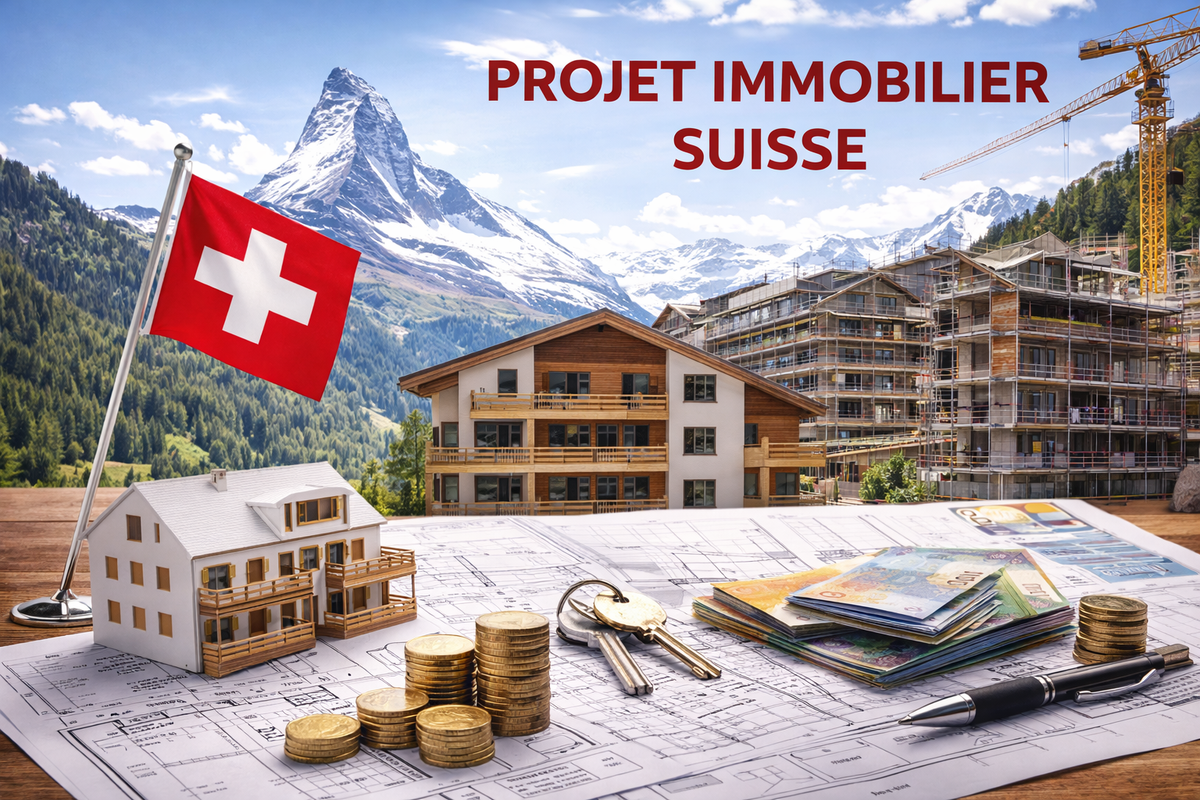
When we talk about how to invest your money in Switzerland, real estate almost always comes up as an essential option.
Why?
Because it combines several advantages that few other investments offer at the same time.
A real estate property is:
a tangible asset concrete, an element of lasting wealth and an investment that can benefit from a financial leverage effect
Unlike other, more abstract investments, a property is tangible. It can be lived in, rented out, or sold.
In many regions of Switzerland, the demand for housing remains high. This pressure on the market helps support property values over the long term.

A heritage vision
Investing in real estate isn’t just about buying a home. It’s often a broader undertaking.
A property can be used to:
- reduce or replace a rent payment
- build wealth
- prepare for retirement
- passing on an asset to your children
It is precisely for this reason that many individuals begin their investment strategy with real estate.
Understanding how the mortgage works then becomes an essential step in making a real estate project a reality.
The factors that influence the success of a real estate investment
Not all assets are equal. Certain factors play a decisive role in the success of an investment.
The location
In real estate, location is still the number one criterion.
A property located in a lively neighborhood is more likely to maintain or increase its value. This is why it’s so important to be supported by a financial investment advisor.
The items that are often searched for are:
- the proximity to public transport
- access to jobs
- the quality of schools
- local infrastructure
- the economic dynamism of the canton
An experienced investor often sums up the situation like this:
“A good location forgives many mistakes. A bad location, on the other hand, forgives almost nothing.”

The purchase price
The purchase price directly affects potential profitability.
Buying at the right pricehelps secure part of the asset’s future value.
To do this, it is essential to analyze:
- local market prices
- comparable properties
- the recent evolution of transactions
Financing
Financing plays a central role in a real estate project.
The structure of the loan, the interest rate, the term, and the banking conditions can turn an average investment into an excellent project… or the opposite.
That’s why preparing mortgage financing is often a decisive step even before you start viewing properties.
The most common mistakes when investing in Switzerland
Evencautious investorscan make certain mistakes.
Here are the ones that appear most often:
- only buy based on a gut feeling
- neglect the additional costs
- underestimate maintenance costs
- do not anticipate reselling
- to jump at the first opportunity
A real estate project must always be planned with a long-term vision.
Diversifying your investments remains a prudent strategy
Even though real estate is often seen as a cornerstone of wealth, it is not necessary to allocate all of your capital to it.

A balanced strategy can include real estate, financial investments, and a safety savings buffer. Among the options for investing in Switzerland, the FIP makes it possible to support businesses while seeking returns.
This diversification makes it possible to spread risk while maintaining several potential sources of return.
Properly preparing your real estate project before getting started
Many investors think that everything starts when you begin viewing properties. In reality, a serious real estate project starts well before that.

It is important to:
- analyze your financial situation
- determine your real budget
- prepare your application
- understand the stages of financing
There are in fact certain solutions that help structure this process. For example, Ben Immo lets you prepare a solid file even before you start viewing properties.
How much should you invest to get started in Switzerland?
Contrary to popular belief, you don’t need to be extremely wealthy to start investing.
Many investors start out gradually.
A few simple principles can help, such as above all to never invest all your capital, keep a safety buffer of savings and prioritize a long-term perspective
In real estate, personal capital plays an important role. However, bank financing often makes it possible to invest larger amounts thanks to the leverage of credit.

Why does real estate remain a popular strategy?
So many individuals choose real estate, and that’s no coincidence.
This type of investment offers several desirable features:
a tangible asset, a certain degree of long-term stability, potential for appreciation, and a strong heritage dimension.
In a country like Switzerland, where demand for housing remains high in several regions, real estate continues to attract many investors.

Key takeaways
Understanding how to invest your money in Switzerland requires an overall reflection.
Savings accounts offer security, stocks can generate returns, and ETFs provide attractive diversification.
However, for many individuals, real estate remains one of the most defining investments.
It allows you to build tangible assets, benefit from the leverage effect of credit, and frame your project within a long-term strategy.
The key always remains the same: take the time to analyze the project, prepare the financing, and choose a property that matches your goals.
Investing is not a race. It is a wealth-building process that takes place over time.